
Many homeowners in San Diego living in properties built before 1990 face a hidden risk during remodeling.
If you discover suspicious materials, stop work immediately and keep everyone away from the affected area.
Disturbing asbestos releases microscopic fibers that can lead to serious lung diseases over time. Consequently, you must rely on qualified experts to assess the situation rather than attempting a dangerous DIY removal.
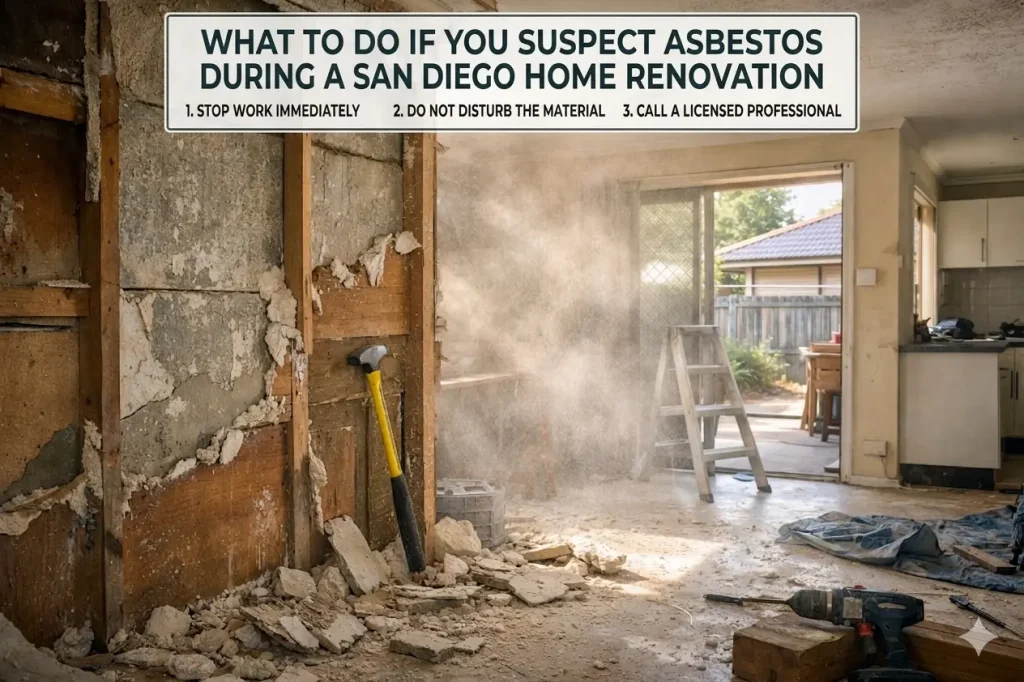
What Is Asbestos and Why Is It Dangerous?
Asbestos refers to a group of naturally occurring minerals once prized as a “miracle” building material due to its fire resistance and extreme durability. However, its strength comes with a deadly cost.
The Inhalation Risk
Asbestos becomes a severe hazard when disturbed by sanding or drilling, as it breaks down into “friable” toxic dust. Because these microscopic fibers easily enter your home’s air supply, leaving the material untouched is your only safe option.
Precaution
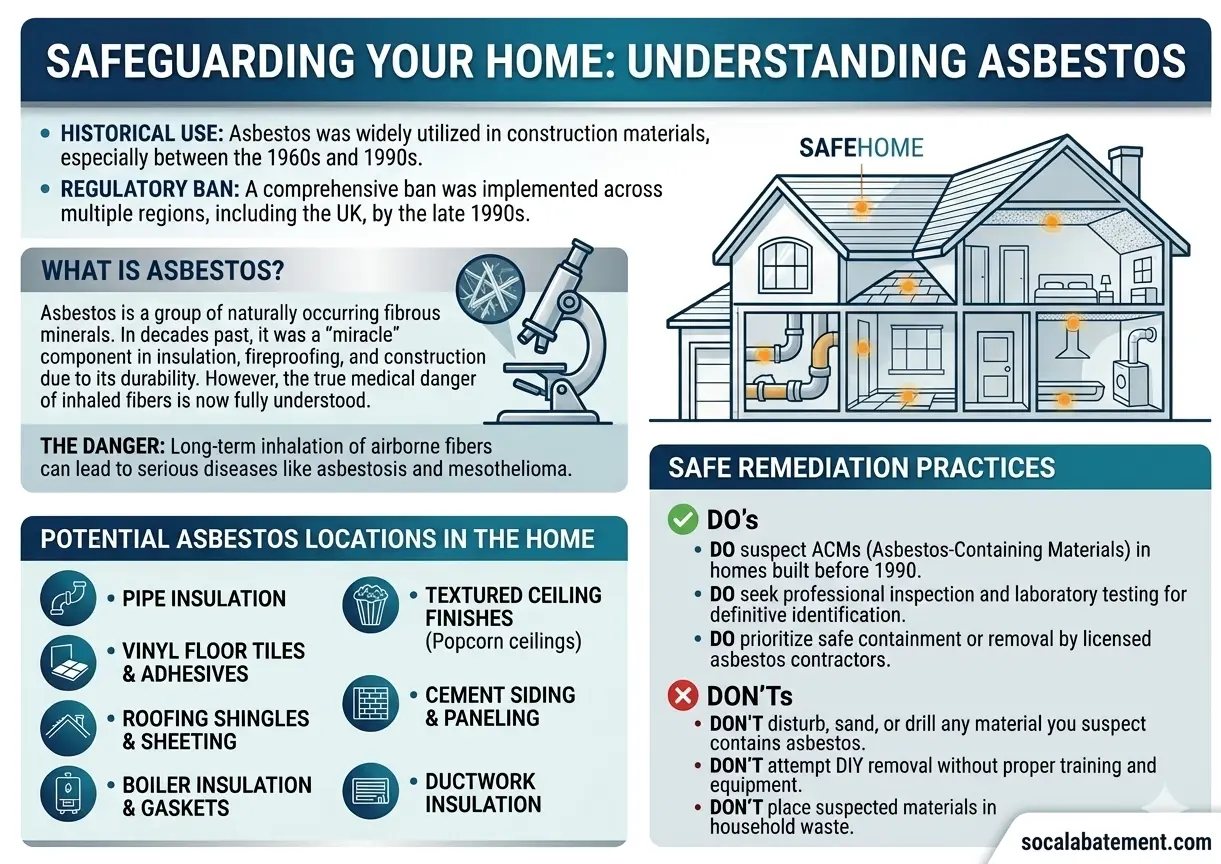
Notably, these fibers are invisible to the naked eye and can remain airborne for hours. Once inhaled, they become permanently trapped in the lungs, potentially leading to:
- Asbestosis: Scarring of the lung tissue.
- Mesothelioma: A rare but aggressive cancer of the chest lining.
- Lung Cancer: Increased risk, especially for those with long-term exposure.
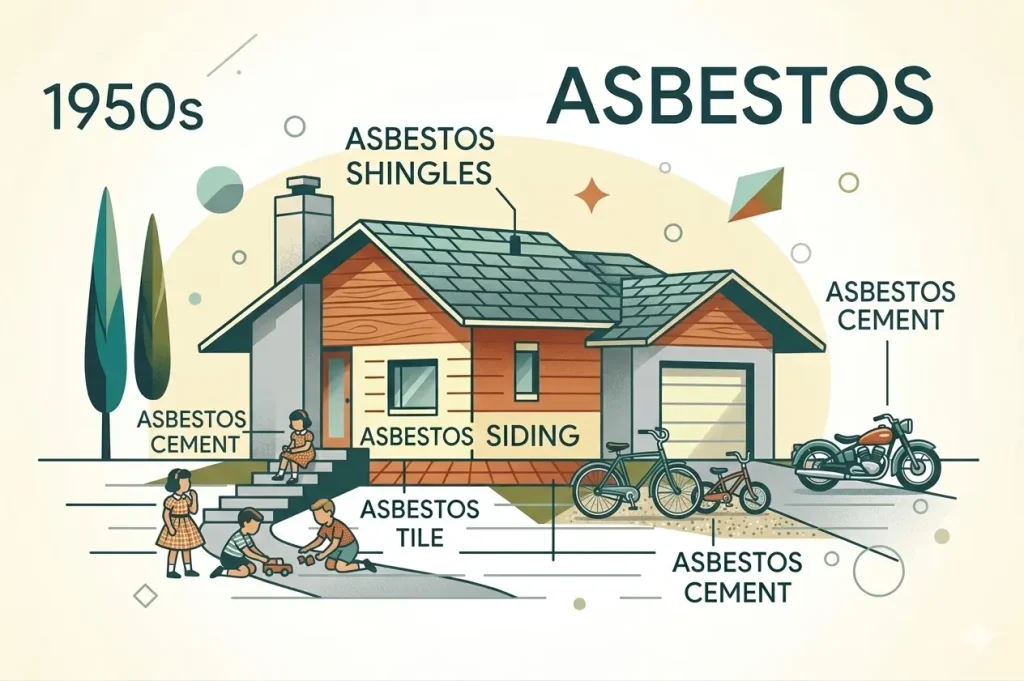
Common Hideouts: Where Asbestos “Hides” in Older Homes
If your home was built or renovated before 1990, asbestos may be tucked away in several surprising locations. Specifically, you should look for it in these key areas:
Interior Systems
- Insulation: The most notorious culprit is vermiculite attic insulation (shiny pebbles). Builders also frequently wrapped asbestos around hot water pipes and furnace ducts.
- Flooring: It is common in 9×9-inch vinyl tiles and the heavy-duty black mastic (glue) used to secure them.
- Walls & Ceilings: The classic “popcorn” texture on ceilings is a frequent offender, along with joint compounds (mud) and older plaster.
Exterior & Miscellaneous
- Roofing & Siding: Manufacturers produced rigid siding shingles and roofing felt with asbestos for weather resistance.
- Surprising Items: You may even find it in window putty, heat shields behind wood-burning stoves, or “fake ashes” in vintage gas fireplaces.
The Emergency Protocol: 3 Steps to Safety
The moment you suspect asbestos is present, you must act quickly to protect your household.
Stop Renovations Immediately: Cease all activity. Activities like cutting or breaking materials aggressively disturb the surface and release fibers.
- Avoid DIY Removal at All Costs: In fact, DIY removal is the most common cause of accidental exposure. Since you lack industrial-grade safety equipment, leaving the area untouched is the only way to ensure your long-term health.
- Hire Licensed Asbestos Experts: Unlike general contractors, licensed specialists use HEPA-filtration and specialized containment to remove or seal asbestos safely.
Remediation Options: Removal vs. Encapsulation
After a professional inspection, you will typically choose between two main methods of remediation.
| Feature | Asbestos Removal (Abatement) | Asbestos Sealing (Encapsulation) |
| The Goal | Physically extracting all asbestos. | Applying a sealant to “lock” fibers in place. |
| Safety Level | Permanent: The risk is gone. | Conditional: Safe as long as the seal is intact. |
| Cost Impact | High: Requires labor and hazardous disposal. | Moderate: Lower labor and no disposal fees. |
| In-Process Risk | Significant: High potential for fiber release. | Minimal: Material remains undisturbed. |
| Best For | Damaged, crumbling, or friable materials. | Intact materials like pipes or solid tiles. |
Conclusion
Finding asbestos is stressful but manageable with professional help. Crucially, hiring licensed experts for testing and removal is the only way to ensure a hazard-free home. By doing so, you protect your family’s health while successfully completing your San Diego remodel.
Frequently Asked Questions (FAQ)
No. Asbestos fibers are microscopic and invisible to the naked eye. While certain materials like 9×9-inch tiles or popcorn ceilings are high-risk indicators, you cannot confirm the presence of asbestos without professional laboratory testing. Therefore, always treat suspicious materials as hazardous until a certified inspector says otherwise.
Not necessarily. Asbestos is generally only dangerous when it becomes “friable,” meaning it is damaged, crumbling, or disturbed by renovation activities. If the material is in good condition and left completely undisturbed, it typically poses a very low risk to your family’s health.
Interestingly, the answer is often no. If the asbestos is in excellent condition, professionals may recommend encapsulation (sealing it) rather than removal. Because the removal process involves breaking and moving the material, it can actually create more risk than simply leaving it sealed and undisturbed.
Typically, costs vary depending on the size of the area and the type of material. Small projects like pipe wrapping may cost a few hundred dollars, whereas whole-home floor or ceiling abatement can range from $1,500 to over $15,000. Notably, hiring a licensed professional also protects your home’s resale value and prevents future legal liabilities.
Absolutely not. You should never use a regular household vacuum or broom on asbestos dust. Because standard filters cannot trap microscopic fibers, a regular vacuum will simply suck the fibers in and blow them back out into the air, contaminating your entire house. Instead, professionals use specialized HEPA-filtered vacuums and wet-wiping techniques to ensure total clearance.
For the safest results, you should look for a firm certified by the California Contractors State License Board (CSLB) with an asbestos certification. Specifically, it is often best to hire one company for testing and a different company for removal to ensure there is no conflict of interest in the results.
