

In San Diego, the combination of historic homes and a coastal environment creates a unique landscape for asbestos management.
While many homeowners understand the dangers of asbestos, they often treat it as a “someday” problem—something to address during a planned kitchen remodel or a future roof replacement.
However, certain situations transform asbestos from a dormant material into an immediate health crisis. In these cases, you don’t have weeks to plan; you need emergency asbestos removal.
Defining an Asbestos Emergency
According to San Diego County Air Pollution Control District (SDAPCD) Rule 1206, an emergency renovation is an unplanned operation resulting from a sudden, unexpected event.
If you leave this event unattended, it presents an immediate safety or public health hazard.
In a residential setting, an emergency usually occurs when an external force turns non-friable asbestos (hard and stable materials) into friable material (crumbly and easily airborne).
Top 3 Scenarios Requiring Emergency Action
Major Water Damage or Flooding
San Diego’s occasional heavy rains and aging plumbing systems often cause significant water damage.
When water saturates asbestos-containing drywall, acoustic “popcorn” ceilings, or floor tile backing, it destroys the binding agents that hold the fibers in place.
As the material dries, it becomes incredibly brittle and releases toxic fibers into your home’s air.
Fire or Structural Damage
Fires pulverize building materials. If fire damages an older home, the debris likely contains shattered asbestos from insulation, roofing, or siding. Likewise, earthquakes or vehicle impacts can crack stable materials, requiring immediate professional containment.
Unintentional Disturbance During DIY Projects
Homeowners often trigger emergencies during “simple” weekend projects like stripping wallpaper or pulling up linoleum. If you pulverize material and see white dust or grayish fibers, stop immediately. Call for emergency testing and cleanup to protect your health.
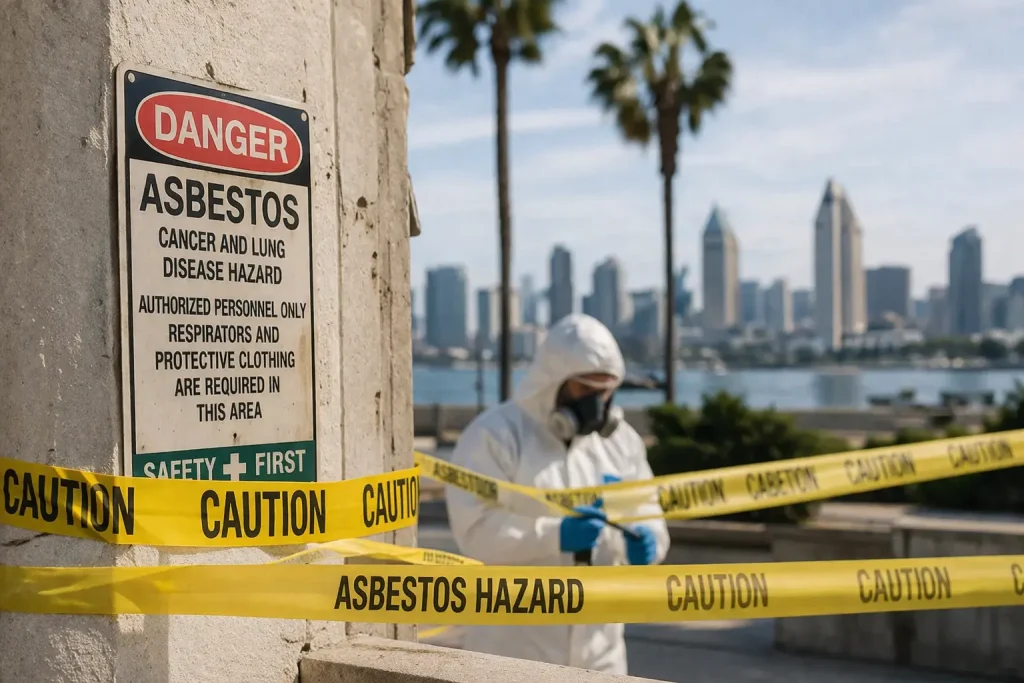
The San Diego “Rule 1206” Protocol
San Diego enforces some of the strictest air quality regulations in the country. Normally, contractors must submit a Notice of Intention ten working days before they start asbestos work.
In an emergency, the SDAPCD allows for expedited notification. This allows licensed professionals to bypass the standard ten-day waiting period so they can stabilize your home immediately.
To qualify, a Certified Asbestos Consultant (CAC) must usually document that the situation poses an “imminent threat.”
Signs Your Situation Is an Emergency
- Visible Dust Clouds: Fine, grayish dust settles on furniture after a ceiling leak or wall impact.
- Water-Logged Popcorn Ceilings: Sections of textured ceiling sag, peel, or fall off due to moisture.
- Exposed Black Mastic: Dark, tar-like adhesive under broken floor tiles shows signs of scraping or sanding.
- Crumbled Pipe Insulation: “Chalky” wrapping around old pipes splits or turns to powder.
Immediate Steps to Take
If you suspect an asbestos emergency in your San Diego home:
- Seal the Area: Turn off your HVAC system to prevent fibers from circulating through the vents. Close all doors to the affected room.
- Evacuate the Zone: Keep children and pets away from the debris. Do not attempt to vacuum or sweep the mess, as these actions launch millions of fibers into the air.
- Call a Professional: Contact a licensed San Diego asbestos abatement company. Ensure they use “negative pressure” equipment to keep your family safe during the emergency removal.
Emergency removal in San Diego costs more than planned projects. Companies charge higher rates to mobilize crews quickly and meet strict disposal rules. While standard removal averages $1,155 to $1,813, emergency prices often exceed these figures based on the contamination level.
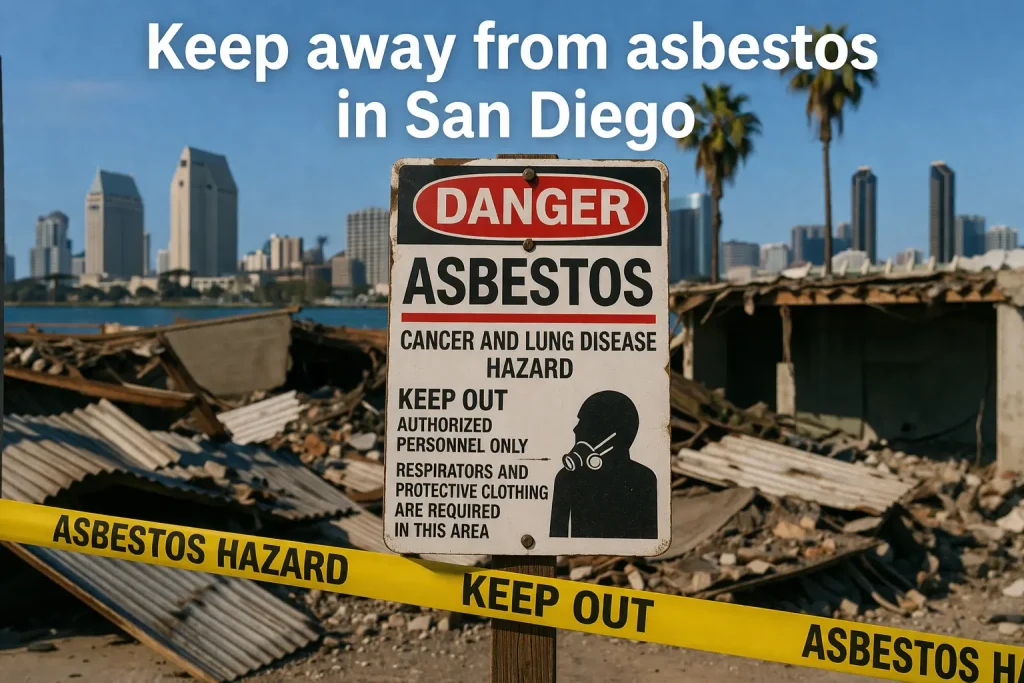
Conclusion
Proactive asbestos management protects your San Diego home. While dormant asbestos stays safe, accidents create immediate risks. Act quickly by recognizing emergency signs and Rule 1206. Choose professional help over DIY to keep your family safe.
Frequently Asked Questions (FAQs)
Licensed professionals can typically stabilize a site within 24 to 48 hours. While standard projects require a 10-day notification period, the SDAPCD emergency protocol allows contractors to begin work immediately to mitigate imminent threats.
It depends on the cause of the damage. If a “covered peril” like a sudden pipe burst or fire caused the asbestos disturbance, your insurance policy may cover the abatement costs. However, insurance rarely covers asbestos found during a standard renovation or home maintenance.
Usually, professionals recommend that residents evacuate the immediate area or the entire home until they achieve “clearance.” Experts use negative air pressure and plastic containment zones to prevent fiber drift, but complete evacuation ensures maximum safety.
Stop all work immediately. Do not attempt to clean up the dust with a household vacuum or broom, as this spreads fibers. Mist the area lightly with water to keep dust down, seal the room, and call a Certified Asbestos Consultant (CAC) for emergency testing.
San Diego maintains strict air quality standards to protect the public from the long-term health effects of asbestos exposure, such as mesothelioma. Rule 1206 ensures that every project—emergency or otherwise—follows rigorous containment and disposal procedures.
Look for contractors registered with DOSH (Division of Occupational Safety and Health) and the CSLB (Contractors State License Board) with an ASB certification. Verify their standing and ensure they offer 24/7 emergency response services for residential properties.
